
“When you can measure what you are speaking about, and express it in numbers, you know something about it.” — Lord Kelvin
From a small village in Vietnam to the United States, my journey has been shaped by perseverance, education, and a passion for geotechnical engineering. Through years of study, research, and hands-on engineering practice, I have pursued a simple belief: engineering knowledge becomes meaningful when scientific principles meet real-world challenges.
1. Where My Journey Began
I grew up in a small village named Ngã Hậu in Vĩnh Long Province, in Vietnam’s Mekong Delta, during a difficult period in the country’s history. Although the Vietnam War had ended in 1975, the years that followed brought economic hardship, limited resources, and few opportunities for many families.
At that time, our entire village had no electricity. Throughout elementary and middle school, I studied at night by the light of an oil lamp. After school, I helped my parents tend our buffalo in the flooded rice fields. When I reached high school, I had to rent a small room near the school because it was too far from my village to commute every day.
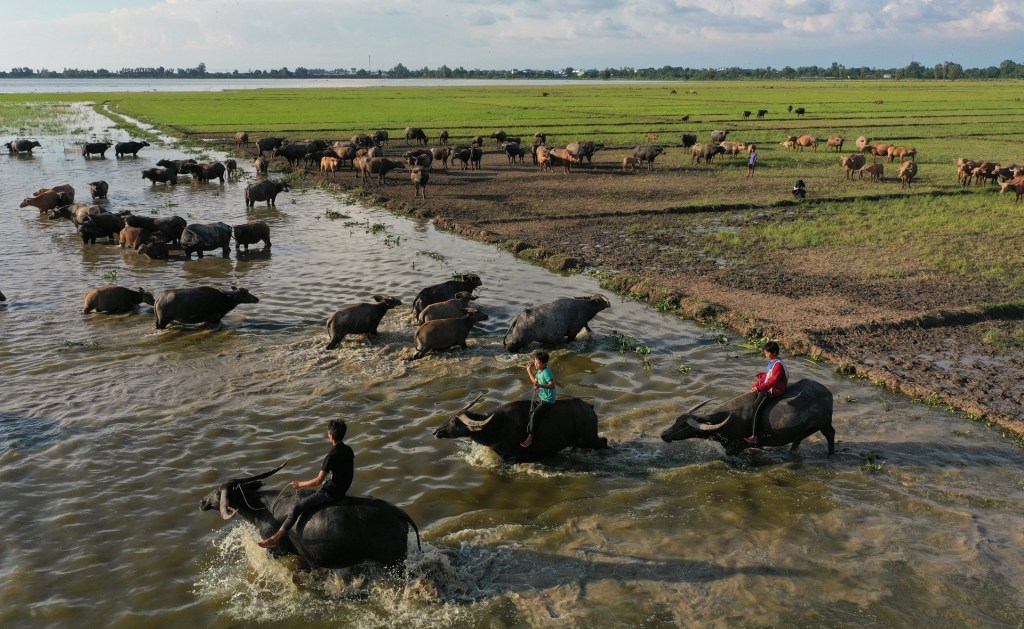
Illustration of tending buffalo after school (source: https://dantri.com.vn/)
These early experiences taught me the value of education, perseverance, and making the most of every opportunity. Back then, I never imagined that one day I would travel to the United States, earn a Ph.D. in Civil Engineering, and build a new life thousands of miles from home.
Looking back, I realize that my journey began with a simple goal: to continue my education despite the challenges around me. That determination became the foundation for everything that followed.
2. Building My Foundation in Engineering
My professional journey began in Vietnam, where I earned my bachelor’s degree in Civil Engineering from Thuy Loi University in 2003.
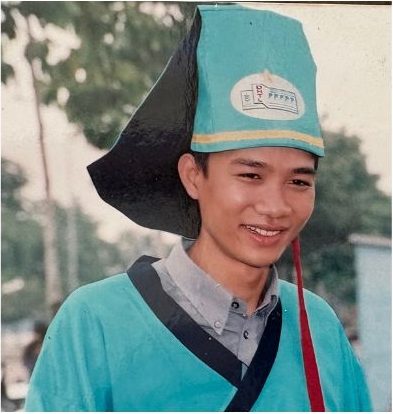
Bachelor of Engineering, Thuy Loi University (2003)
After graduation, I began my career in geotechnical engineering, including work on hydropower developments. From 2003 to 2008, I served as a geotechnical engineer with EVN Hydropower Project Management Unit No. 6, where I contributed to the 300 MW Dai Ninh Hydropower Project.
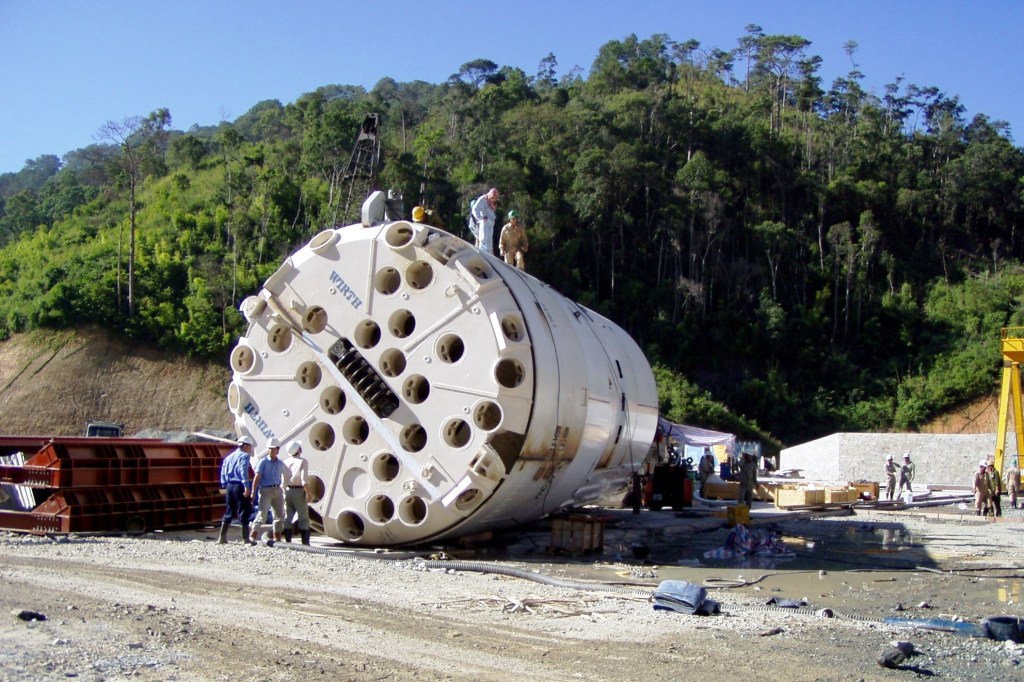
Tunnel Boring Machine for the 11-km Dai Ninh Hydropower Tunnel (2005)
These early professional experiences introduced me to the practical challenges of engineering. I learned that the ground beneath a structure can be complex and unpredictable, and that successful engineering requires more than theoretical knowledge. It requires careful investigation, sound technical judgment, and an understanding of how engineering decisions affect real projects.
From 2008 to 2010, I worked as a chief engineer at ADCOM Consultants, where I conducted static and dynamic pile load tests. During this period, I gained experience with the Osterberg Cell (O-cell) pile load testing method, initially working with a foreign company hired to perform the test. Through this experience, I developed the knowledge and practical skills needed to conduct O-cell tests independently. I subsequently became the first Vietnamese engineer to perform this type of test and trained other Vietnamese engineers to carry out the testing. Over time, Vietnamese engineers developed the capability to perform O-cell pile load tests locally, reducing the need to rely on foreign specialists. This experience deepened my understanding of pile foundation behavior and strengthened my interest in advanced pile testing and foundation engineering.
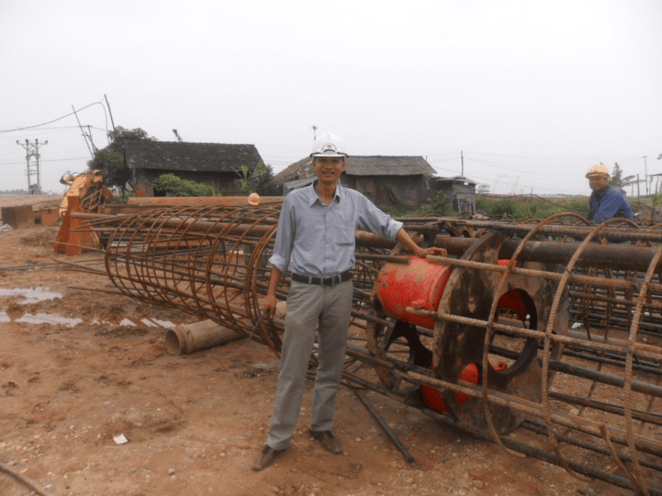
Osterberg Cell (O-cell) Pile Load Test, Noi Bai–Lao Cai Expressway Project (2010)
My interest in deepening my technical knowledge led me to pursue a master’s degree in Civil Engineering at Ho Chi Minh City University of Technology, which I completed in 2011.
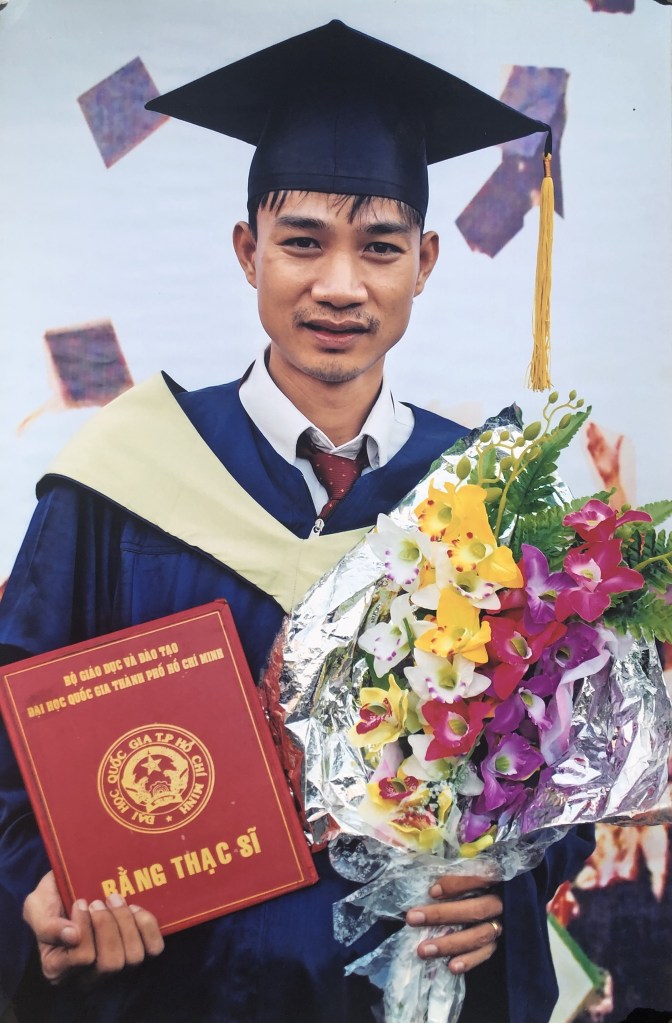
Master of Civil Engineering, Ho Chi Minh City University of Technology (2011)
Each stage of my education and professional experience strengthened my interest in soil behavior, foundation engineering, and the development of practical solutions to challenging geotechnical problems.
Although I had already achieved important milestones in Vietnam, another major chapter of my life was about to begin.
3. A New Life in the United States
In 2014, I began my Ph.D. studies in Civil Engineering at The University of Texas at Arlington.
Coming to the United States represented far more than an opportunity to earn another degree. It meant beginning a new life in a different country, adapting to a new environment, and challenging myself academically and professionally.
As someone who had grown up in a village where I studied by the light of an oil lamp, the experience was particularly meaningful. I had traveled a long way from the environment in which I began my education, both geographically and personally.
My doctoral studies gave me the opportunity to explore advanced geotechnical engineering concepts, conduct research, and work toward developing new approaches to pile foundation design.
In 2017, I earned my Ph.D. in Civil Engineering. It was one of the proudest milestones of my life.
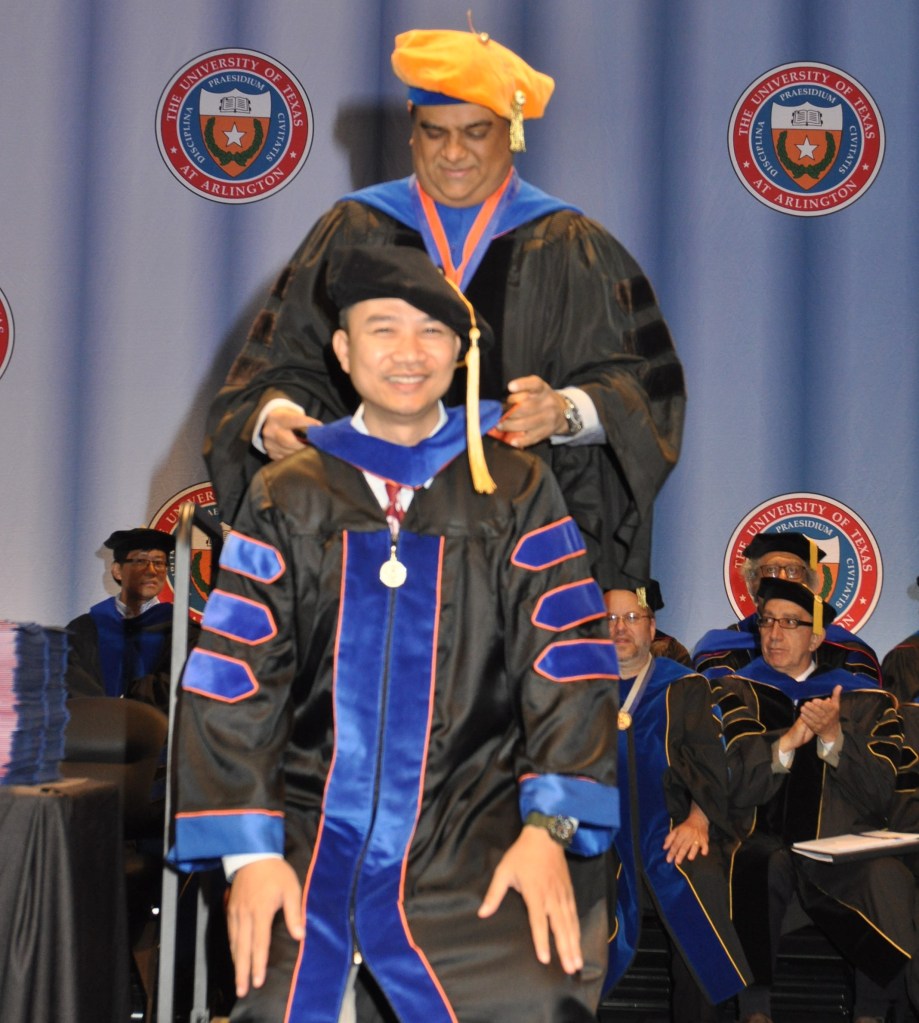
Ph.D. in Civil Engineering, The University of Texas at Arlington (2017)
When I reflect on that achievement, I remember the years of studying in Vietnam, the limitations of my childhood, and the younger version of myself who never imagined he would one day stand where he was.
My Ph.D. represented years of education, research, persistence, and personal growth. More importantly, it strengthened my belief that engineering knowledge is most valuable when it can be translated into practical applications that benefit the profession.
4. Turning Research into Innovation: The P-Cone
One of the most meaningful parts of my doctoral journey was developing the P-Cone, a novel cone testing device connected to my research on pile foundation design.
My dissertation, Development of a Novel Cone Testing Device for Pile Foundation Design, focused on advancing cone testing technology for geotechnical engineering applications.
Pile foundations transfer structural loads through soil and, when properly designed, help support structures under challenging ground conditions. Understanding soil behavior and evaluating foundation performance are essential to developing safe, reliable, and economical designs.
My doctoral research allowed me to explore a new testing device intended to contribute to pile foundation design. Rather than limiting my work to studying existing methods, I had the opportunity to develop an engineering concept and investigate how it could be applied to practical problems.
The P-Cone represents an important milestone in my professional development because it connects several things I value: curiosity, technical knowledge, innovation, and practical engineering.
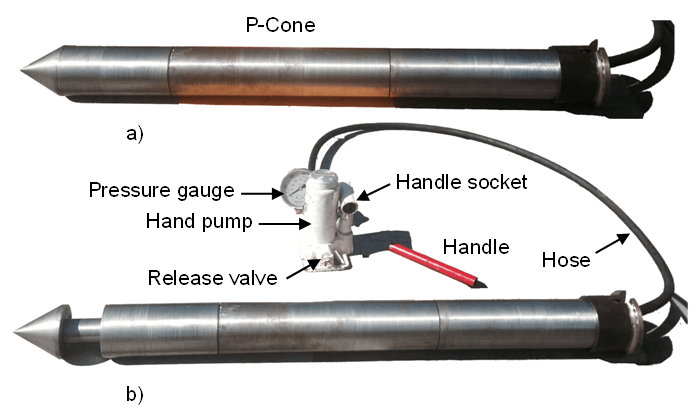
P-cone: A Novel Cone Test Device for Pile Foundation Design
For me, developing a new testing device was not simply an academic exercise. It was an opportunity to explore how engineering research could contribute to better understanding and solving real-world challenges.
This experience continues to influence my approach to geotechnical engineering. I believe engineers should not only understand established methods but also remain open to new ideas, question existing assumptions, and look for better ways to address difficult problems.
You can learn more about my doctoral research and the P-Cone through my dissertation at The University of Texas at Arlington:
https://mavmatrix.uta.edu/civilengineering_dissertations/438
5. From Academic Research to Practical Engineering
After completing my Ph.D., I continued developing my career in geotechnical engineering, combining research-based knowledge with hands-on project experience.
Throughout my professional journey, I have worked on a wide range of geotechnical engineering challenges, including geotechnical investigations, laboratory testing, soil improvement, foundation design, retaining wall design, and slope stability analysis.
These experiences have allowed me to apply fundamental geotechnical engineering principles to real-world projects involving complex subsurface conditions. They have also strengthened my understanding of the relationship between field investigations, laboratory testing, engineering analysis, design recommendations, and construction performance.
Over the years, I have learned that successful geotechnical engineering requires more than theoretical knowledge and calculations. It requires careful evaluation of site conditions, sound engineering judgment, practical experience, and the ability to develop solutions that address the specific challenges of each project.
My academic background has provided a strong technical foundation, while my professional experience has taught me how to translate engineering knowledge into practical and effective solutions.
I believe that the combination of research, technical expertise, and hands-on experience is essential to solving challenging geotechnical problems. This philosophy continues to guide my approach to engineering and forms an important part of the vision behind GeoInsights Engineering, LLC.
6. The Vision Behind GeoInsights Engineering, LLC
The experiences that shaped my life have also shaped my vision for GeoInsights Engineering, LLC.
Growing up with limited resources taught me to value opportunities. My education taught me the importance of continuous learning. My research taught me to explore new ideas. And my professional experience taught me that good engineering depends on understanding real-world conditions and making informed decisions.
These principles form the foundation of my approach to geotechnical engineering.
Through GeoInsights Engineering, I aim to bring together academic knowledge, hands-on experience, and practical engineering judgment to help clients better understand subsurface conditions and make informed decisions about their projects.
I believe that every site has a story. The soil profile, groundwater conditions, laboratory results, and field observations each provide important pieces of information. Our responsibility as geotechnical engineers is to interpret that information carefully and translate it into practical recommendations.
I also want GeoInsights Engineering to be a platform for sharing knowledge. Through this website, I plan to share engineering insights, lessons learned from real projects, field observations, technical discussions, and experiences that may help other engineers, clients, and students.
My goal is not simply to provide engineering services. It is to contribute to a culture of thoughtful engineering, continuous improvement, and practical problem-solving.
7. A Journey That Continues
When I look back on my life, I see a journey that I could never have predicted as a child.
I remember a time when the entire village had no electricity. I remember studying by the light of an oil lamp throughout elementary school and middle school. When I reached high school, I had to rent a small house near my school so I could continue my education. Life was not easy, but I kept moving forward, one step at a time.
Today, I have earned a Ph.D. in Civil Engineering, become a licensed Professional Engineer and a Board Certified Geotechnical Engineer, and developed a novel cone testing device through my doctoral research.
I am proud of these achievements, but I know that my journey is not defined by degrees, credentials, or professional titles alone. It is also defined by the lessons I have learned, the challenges I have faced, and the opportunities I have had to grow as an engineer and as a person.
I remain committed to learning, sharing knowledge, exploring innovative solutions, and contributing to the geotechnical engineering profession.
My story is a reminder that we may not choose where our journey begins, but we can continue working toward a future we once thought impossible.
From a small village in Vietnam, studying by the light of an oil lamp, to earning a Ph.D. and pursuing engineering innovation in the United States, my journey has been shaped by perseverance, education, and a belief in the power of knowledge.
This is my story. It is also the foundation of the values I hope to bring to GeoInsights Engineering, LLC: technical excellence, practical experience, continuous learning, and a commitment to helping others make better engineering decisions.
And the journey continues.

